Eurasian Steppe. Cannabis has a complex history in steppe regions such as Kazakhstan, southern Russia, and Ukraine, where it appears to have been variously cultivated for fibre and/or ‘drug’ production in the modern, Classical, and prehistoric eras. Six million years ago, true wild Cannabis was already present on the western steppe, including its westernmost reaches in Europe. The species may have been brought into cultivation and domesticated here independently of its populations in Asia. Early evidence for cultivation has been identified in the form of domesticated pollen at several sites on the western steppe, most associated with the Yamnaya culture (3300–2600 BCE).
In its most ancient domesticated form Cannabis was perhaps a triple-use crop cultivated for fibre, grain, and drugs (whether for medicine or ‘intoxication’) from its leaves and cannabinoid-rich inflorescences. The earliest method for getting high on Cannabis was almost certainly smoking – i.e., fumigation. Pottery braziers, some dating to the Neolithic, have been interpreted as used for this purpose, notably a find of what appear to be charred Cannabis seeds in a third millennium BCE burial from Romania.
In the Histories, Herodotus (c. 440 BCE) describes Scythians using braziers inside tents to inhale smoke on the Pontic Steppe grasslands of what is now eastern Ukraine. The Pontic Scythians were an ethnolinguistically Iranic nomadic culture who ruled the rich pasturelands around the Black Sea after migrating through Central Asia, the Caucasus, and the Eurasian Steppe from their original homeland around the Altai-Sayan region.
Pollen data examined by McPartland suggest Cannabis cultivation became widespread on the western steppe only after it was introduced in the late Bronze and early Iron Ages by the Scythians. The landraces cultivated in Iron Age Scythia were perhaps representative of the oldest domesticated form of Eurasian cannabis, which is likely to have been a triple-use crop for fibre, grain, and ‘drugs’. Residue inside gold vessels dating c. 400 BCE excavated from a Scythian kurgan in Stavropolski Krai on the Pontic-Caspian grasslands of southern Russia indicates they were used to drink beverages containing cannabis and opium. Subsequent European landraces cultivated by cultures such as the Balts, Slavs, Romans, and Celts appear to have been specialized for grain and fibre – i.e., formally subsp. sativa. Likewise, in the modern era, Ukraine and southern Russia became major centres of cultivation of fibre and grain hemp varieties.
Definitive formal classification of wild-type populations and landraces (i.e., domesticates) from regions such as Crimea and Kazakhstan is challenging using any of the formal taxonomic keys proposed to date for ranks below the species level – i.e., below Cannabis sativa. However, the currently available Siberian and Kazakh accessions are day-neutral (‘auto-flowering’) and do meet many of the criteria often applied by aficionados for the informal taxonomic category ‘Ruderalis’.
Showing all 2 results
-
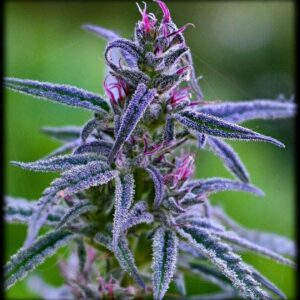
Kazakh Ruderalis
Price range: £19.49 through £38.99 Select options This product has multiple variants. The options may be chosen on the product page -
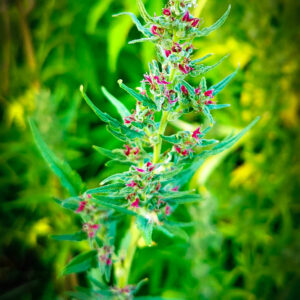
Siberian Ruderalis
Price range: £17.49 through £34.99 Select options This product has multiple variants. The options may be chosen on the product page