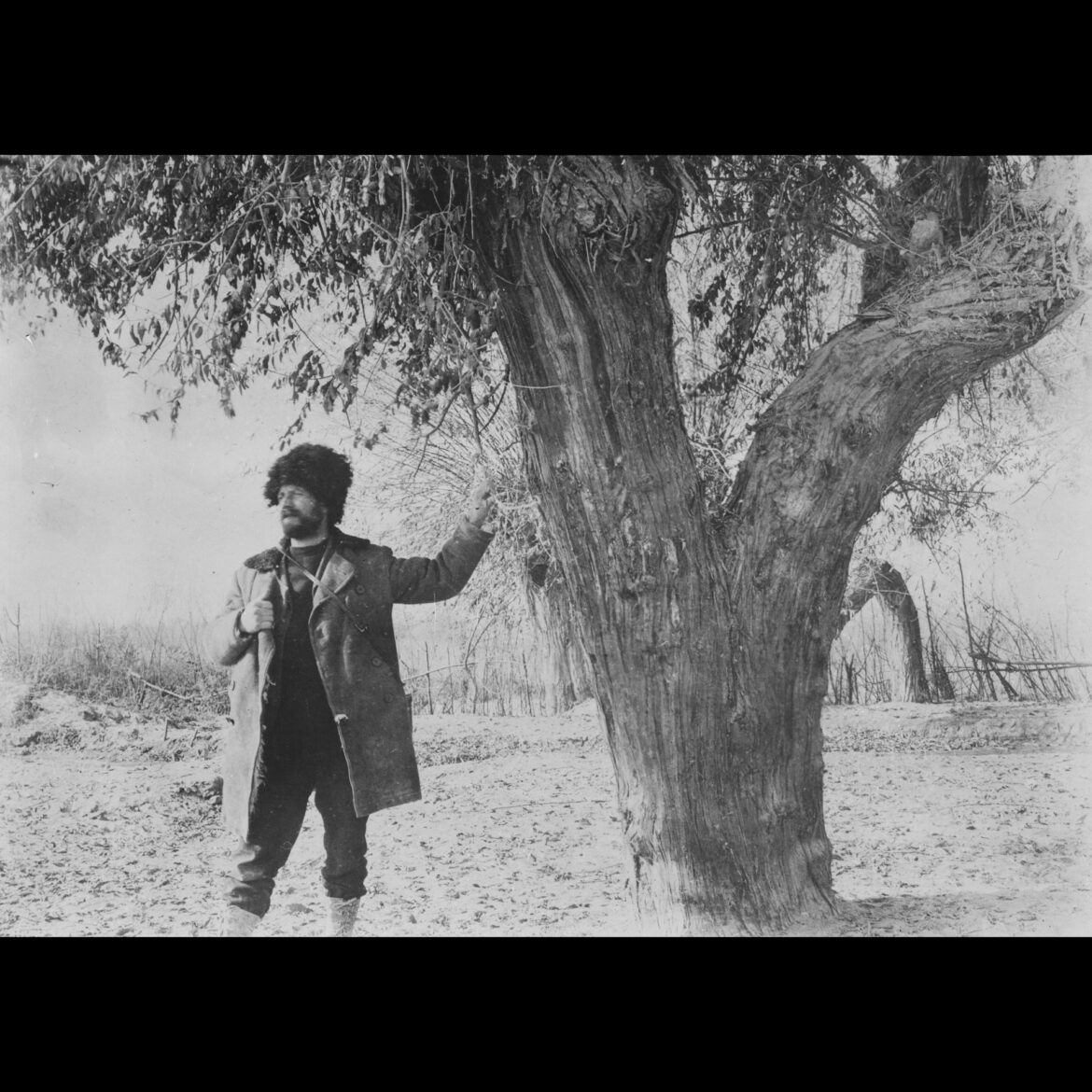
The plant hunter Frank Meyer is shown in China in this photo from 1910, while working for the US Department of Agriculture.
In December of this year, after a gruelling trek through the winter desert and mountains of southern Xinjiang, Meyer collected samples of a variety of Central Asian landrace that was then all but unknown in the West.
Known in the Uyghur language as ‘Kandivi’, this was the type of plant popularly known today as an ‘Indica’. Extensive cultivation took place outside oasis centres such as Yarkand, largely for export south via Kashmir to the markets of north India. Each summer, the Uyghur charas caravans crossed the passes of the Karakorams, first for Leh in Ladakh, finally arriving at government bonded warehouses in Amritsar.
The sample of ‘Kandivi’ seeds was forwarded to the Nevada Experimental Station outside Reno, where it was sown by the botanist PB Kennedy and his team in early June 1913. By mid-September, the crop was near ready and Kennedy noted its ‘sticky exudation’ and ‘skunky odor’. This may well be the first time a field of ‘Indicas’ was cultivated in the United States.
Related Posts
 Open Source Civilization and the Unexpected Origins of the Silk Road
 Documentary – 1970: The Year That Changed Cannabis in America Forever
 Are the effects of landraces really so different from modern cannabis?
 Ganja plant ready for cutting – Bengal, India (1894)
 Dervishes – Samarkand, Central Asia (1870s)
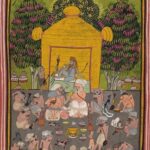 Stoned sadhus smoking ganja – Rajasthan, India (1780s)